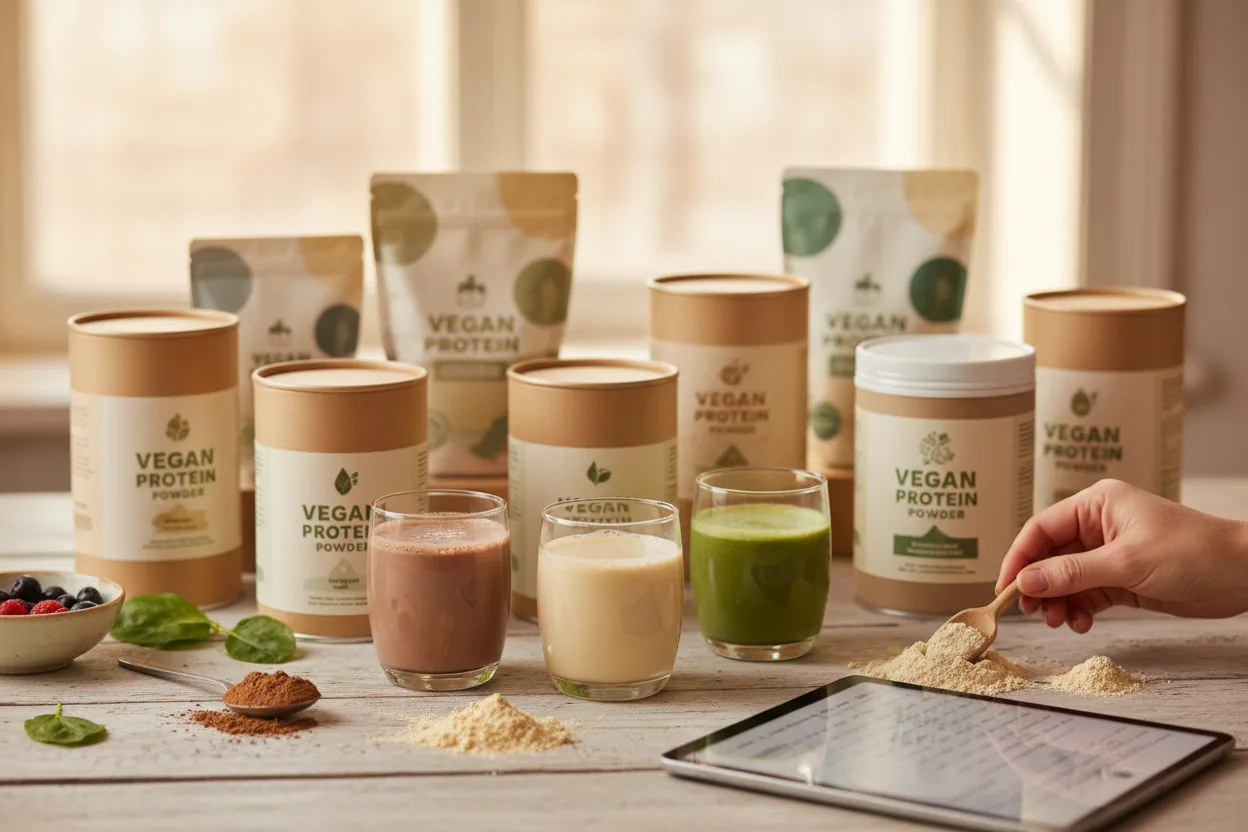
How we tested
Each powder was blended three ways — with water, with oat milk, and in a banana-and-spinach smoothie — by three different testers on our team. We scored taste (out of 10), mixability/grittiness (out of 10), and calculated cost per 25g of protein based on current retail pricing. Powders with more than 3g of added sugar per serving were flagged separately, since several "best vegan recipe blog" round-ups tend to bury this detail.
Our top 5 picks
1. Best overall: Pea-Rice Blend, Unflavored
4.7/5
The combination of pea and rice protein gives a more complete amino acid profile than either alone, and this specific blend mixed smoothly in all three tests with almost no grit. At roughly $1.10 per 25g of protein, it's also one of the better values on this list.
Best for: Everyday use, savory or sweet smoothies, cooking and baking additions.
2. Best flavor: Chocolate Pea Protein
4.4/5
Genuinely tastes like chocolate milk rather than "vegan chocolate protein," which is a rarer achievement than it should be. Slightly grittier with plain water; noticeably smoother blended with oat milk.
Best for: Readers who want a treat-like shake, not just a supplement.
3. Best for baking: Hemp Protein Powder
4.2/5
Too earthy-tasting to love in a plain shake, but that same nutty flavor disappears nicely into muffins, pancakes, and energy balls. Also brings fiber and omega-3s that isolate-style powders lack.
Best for: Recipe integration rather than drinking straight.
4. Best budget pick: Soy Protein Isolate
4.0/5
The lowest cost-per-gram of protein on this list by a wide margin, and mixability was surprisingly good. Flavor is plain and slightly beany — fine in a fruit-forward smoothie, less pleasant in water alone.
Best for: Budget-conscious buyers who blend protein into fruit smoothies rather than drinking it plain.
5. Best for sensitive stomachs: Sprouted Brown Rice Protein
4.1/5
The gentlest option in our test group for readers who find pea protein bloating. Mixability was our only knock — it settles at the bottom of the glass faster than the others, so give it a stir halfway through.
Best for: Readers with sensitive digestion or pea allergies.
What we'd skip
Two powders in our original nine didn't make the cut: one had 9g of added sugar per serving (more than some desserts), and another separated into a chalky layer within 2 minutes of mixing, even with vigorous shaking. We won't name names, but check the nutrition label on any "best vegan recipe blog protein" round-up before buying.
Full comparison table
| Rank | Type | Taste | Mixability | $ per 25g protein |
|---|---|---|---|---|
| 1 | Pea-rice blend | 8.5/10 | 9/10 | $1.10 |
| 2 | Chocolate pea | 9/10 | 7.5/10 | $1.35 |
| 3 | Hemp | 6.5/10 | 7/10 | $1.45 |
| 4 | Soy isolate | 7/10 | 8.5/10 | $0.75 |
| 5 | Sprouted brown rice | 7.5/10 | 6.5/10 | $1.20 |
Where we buy these
We generally recommend buying protein powder from the brand's own site or a major retailer rather than third-party marketplace listings, where counterfeit and expired stock is a known issue in the supplement category.
Some links on Verdant Kitchen are affiliate links. If you purchase through them, we may earn a small commission at no extra cost to you. We only recommend products we've personally tested, and no brand paid for inclusion or ranking on this list.
How to choose the right one for you
- Drinking it plain or mostly in smoothies? Prioritize taste and mixability — go with pick #1 or #2.
- Baking with it? Flavor matters less; hemp or an unflavored pea-rice blend disappears into batter better than heavily sweetened options.
- On a tight budget? Soy isolate delivers the best protein-per-dollar without a major taste tradeoff in smoothies.
- Sensitive stomach? Try sprouted rice or a pea-rice blend before soy, which some readers report causes more bloating.
Frequently asked questions
Is pea protein or soy protein better for vegans?
Both are complete or near-complete proteins; pea protein tends to mix better and taste milder, while soy protein is usually cheaper per gram. Neither is objectively "better" — it depends on your priorities.
How much protein do vegans actually need per day?
General guidance is 0.8–1g per kilogram of body weight for most adults, more for those strength training regularly. A protein powder is a convenience tool, not a requirement — whole foods like lentils, tofu, and tempeh can cover most people's needs.